

Every great musician starts with a beginner guitar and a strong desire to learn. You hold the key to unlocking years of musical enjoyment right in your hands. We designed this guide to help you take those crucial first steps with complete confidence.
Set Yourself Up For Success
Creating a dedicated practice environment makes a huge difference in your daily progress. Keep your instrument out on a stand where you can see it easily. You will pick it up much more often when it stays within arm’s reach.
Establish a clear routine that fits perfectly into your regular schedule. Even ten minutes of focused practice beats an hour of distracted playing. Consistency builds the precise muscle memory you need to master new chords and scales.
Essential Gear For New Players
You need a few basic accessories to make your practice sessions highly productive. These essential tools help you stay in tune, play comfortably, and protect your instrument over time.
A Reliable Tuner
An accurate tuner keeps your instrument sounding sweet and trains your ear properly. Clip-on tuners attach right to the headstock and read the direct vibrations of the strings. You can also use free smartphone apps to check your pitch before you play.
Comfortable Guitar Picks
Picks come in many different thicknesses and synthetic materials. Start with a medium or light gauge pick while you learn basic strumming patterns. Buy a variety pack to find the exact style that feels right between your fingers.
An Adjustable Strap
A good strap prevents you from dropping your instrument accidentally. It also encourages proper posture whether you sit or stand while playing. Adjust the length so the instrument rests at the exact same height in both positions.
Extra Guitar Strings
Strings break unexpectedly, especially when you first learn how to tune the instrument. Keep a spare set in your case so you never miss a scheduled practice session. Changing your strings regularly also keeps your tone incredibly bright and clear.
A Sturdy Instrument Case
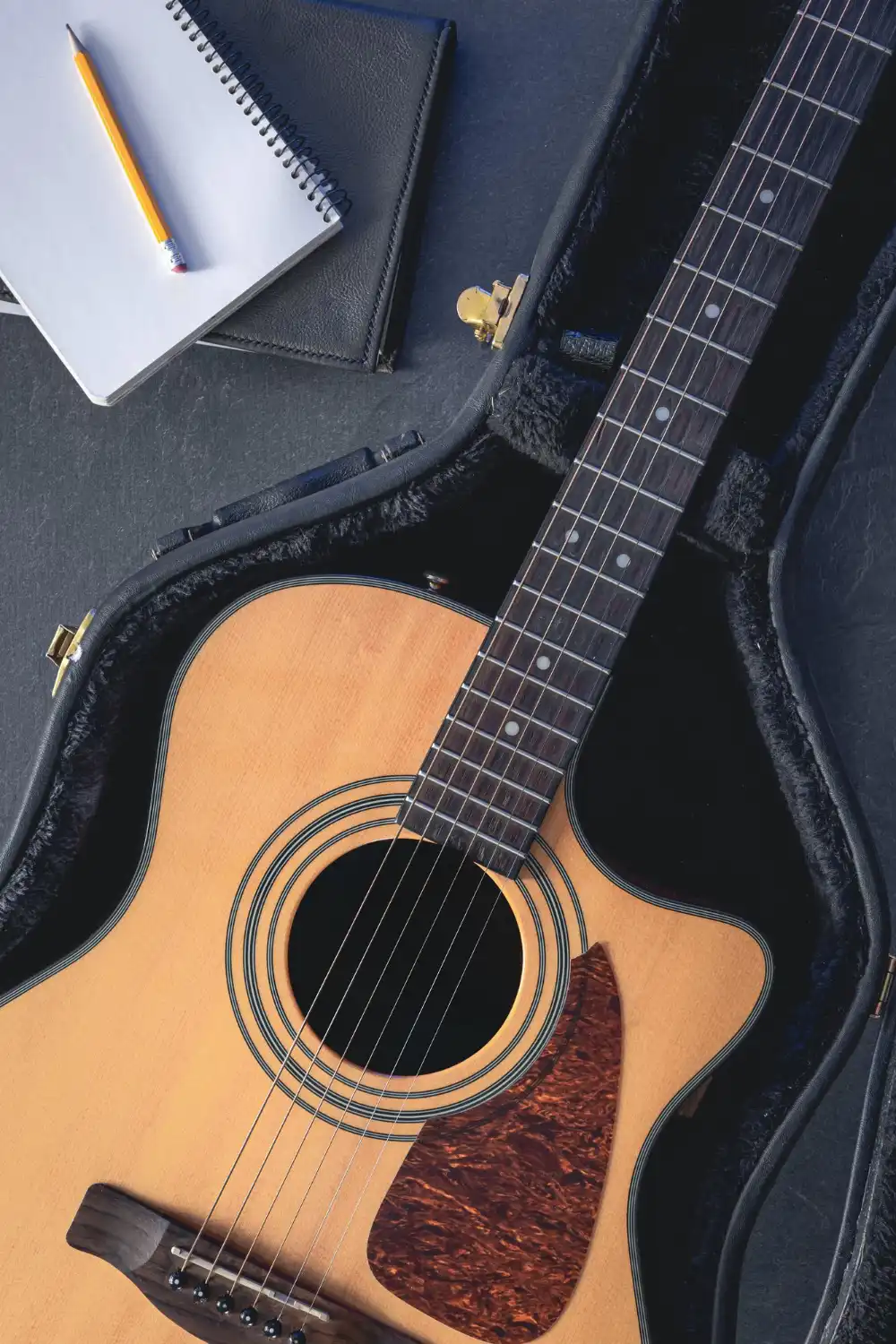
A proper case protects your investment from dust, humidity, and accidental bumps. Soft gig bags work great for quick trips to a lesson or a friend’s house. Hard cases provide maximum protection for travel and long-term home storage.
A Simple Metronome
Rhythm forms the absolute foundation of all popular music. A metronome forces you to play in time and exposes any weak spots in your current technique. Start at a slow tempo and only increase the speed when you play the part perfectly.
Core Techniques To Practice Daily
Clean Chord Transitions
Moving smoothly between chords takes time and focused patience. Pick two basic open chords and switch between them back and forth. Keep your fingers hovering close to the fretboard to minimize any wasted movement.
Alternate Picking
Striking the string with continuous down and up motions increases your speed dramatically. Focus on making the upstrokes sound just as loud and clear as the downstrokes. Keep your wrist relaxed to avoid unnecessary tension and hand fatigue.
Proper Fretting Hand Posture
Press the metal strings using the very tips of your fingers. Curve your knuckles outward so you avoid muting the adjacent strings by accident. Keep your thumb anchored firmly behind the neck for stability and leverage.
Basic Ear Training
Try to figure out simple vocal melodies by finding the matching notes on your fretboard. Listen to a popular song and identify exactly when the underlying chords change. This daily habit connects your hands directly to your internal musical imagination.
Resources
Essay providers like https://essaypro.com/ deliver tailored academic writing that is refined, credible, and suitable for formal evaluation.